Our Story
"Our Journey Throughout GIS Camp II 2025"
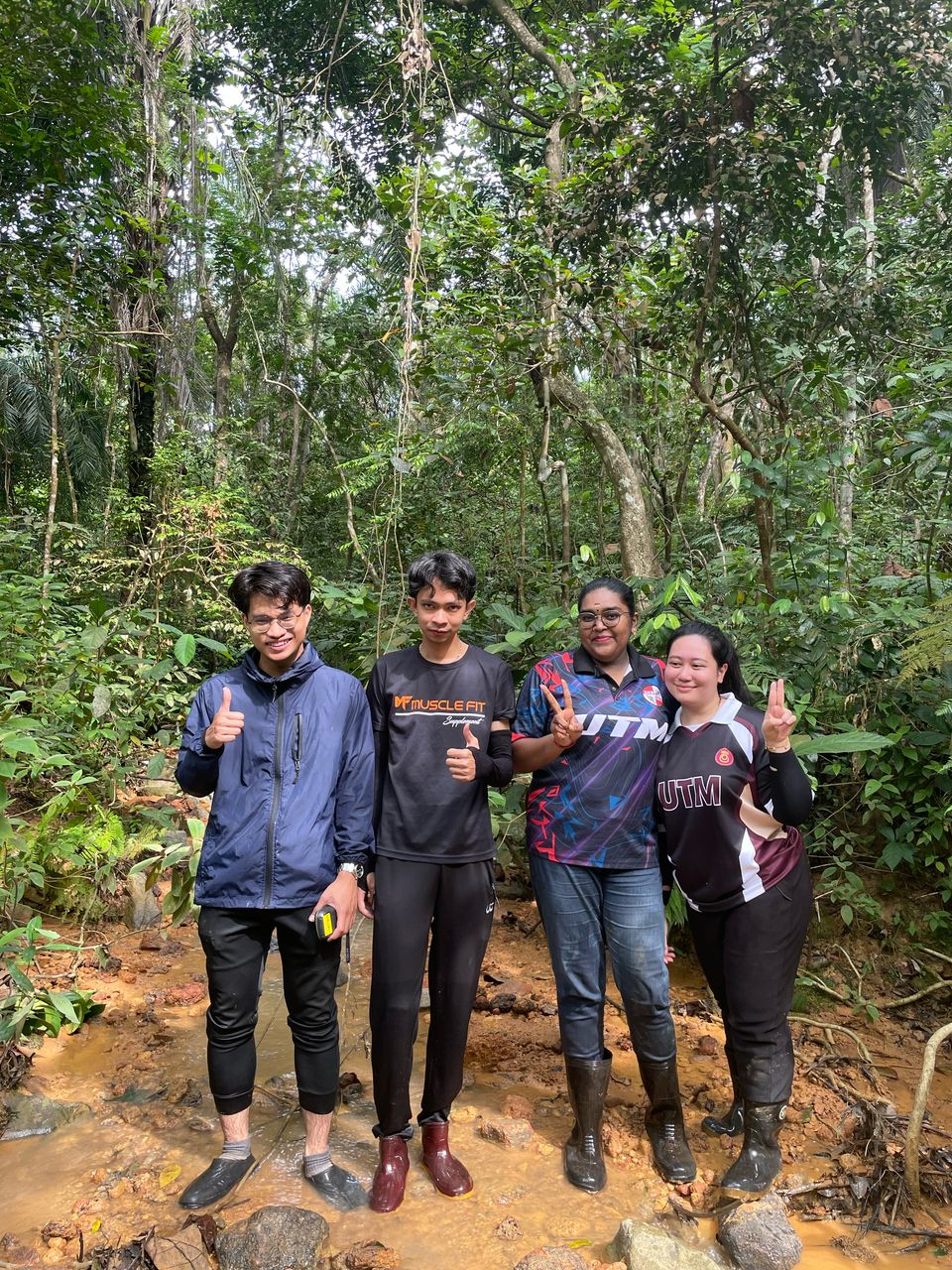
Group 12: Mapping Flood-Prone Areas in UTM Recreational Forest
Our journey began with a mission to uncover the hidden vulnerabilities of UTM Recreational Forest and identify areas most prone to flooding. As climate change intensifies and extreme weather events become more frequent, understanding flood risks in natural landscapes is crucial for environmental sustainability and public safety. With GIS as our guide, we embarked on a detailed exploration of the forest’s terrain, tracing the natural flow of water and analyzing elevation patterns to reveal potential flood-prone zones.
Using Digital Elevation Models (DEM), we conducted a watershed analysis to understand how water moves across the landscape. Watersheds are critical in determining how water is distributed and drained, and our analysis provided a comprehensive view of the forest's hydrological behavior. By examining the slope of the terrain, we determined the speed of runoff, identifying areas where water flows rapidly and those where it tends to accumulate. The flow direction of rivers and streams revealed how water naturally channels through the forest, while aspect analysis provided insights into which slopes receive more sunlight, influencing moisture distribution. Additionally, contour lines detailed elevation changes, helping us identify natural drainage pathways and areas prone to water retention.
Piece by piece, our analysis painted a comprehensive picture of water movement highlighting areas where runoff accumulates and where the land is most susceptible to water retention. These findings are not just maps; they are tools for flood mitigation and environmental management. By identifying critical flood-prone zones, we aim to support decision-makers in implementing measures such as improved drainage systems, reforestation in vulnerable areas, and the creation of early warning systems for recreational visitors.
Through our findings, we offer more than just data; we provide a foundation for conservation and resilience planning. By leveraging GIS and spatial analysis, we contribute to the sustainable management of UTM Recreational Forest, ensuring its natural beauty endures for generations to come. Our work underscores the importance of integrating technology and environmental science to address real-world challenges, fostering a harmonious balance between human activity and nature.